
Who is behind the recent spate of killings in Barcelona?
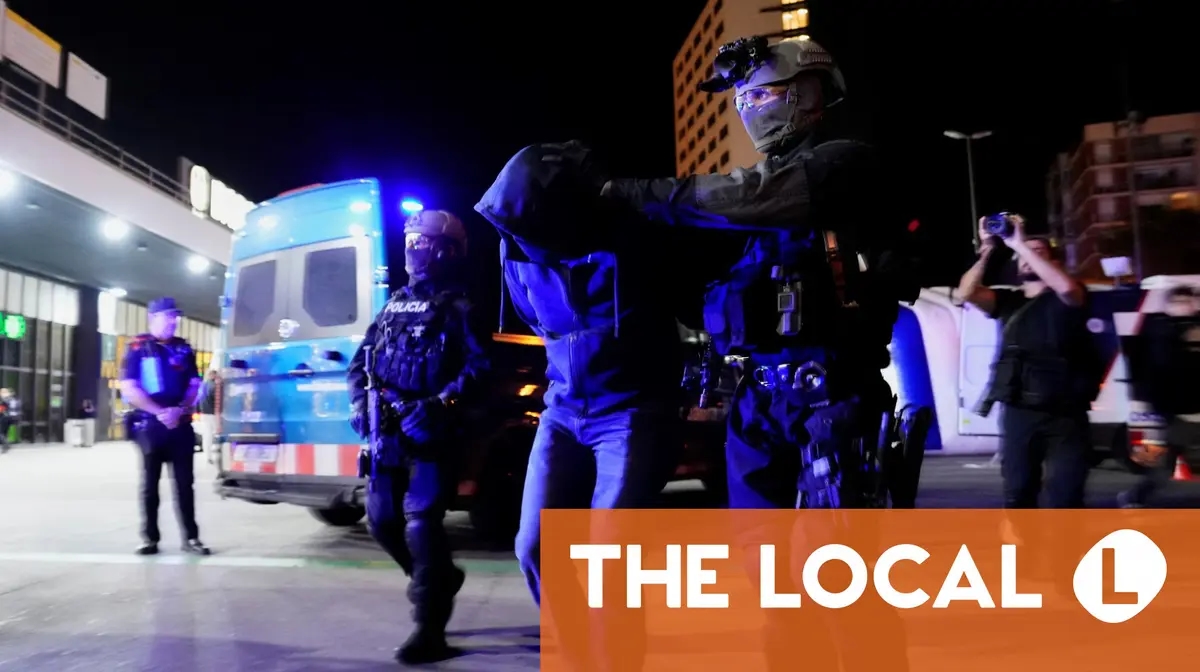
Three people have been shot dead point-blank in the Catalan capital in as many weeks, the latest happening just outside a police station and during Pope Leo's visit to Barcelona. Is there a reason for this spike in murders?
A shocking murder occurred in broad daylight on Tuesday June 9th in the heart of Barcelona, at 10.50 am.
The assailant - a middle-aged, stocky male wearing shorts and a t-shirt and carrying a backpack and a helmet - shot another man point-blank in the head.
The victim fell dead to the ground, right in front of the entrance to a National Police station on Balmes Street, in an affluent area of the Catalan capital.
The murder coincided with Pope Leo's recent visit to Barcelona, while security in the Catalan capital was stronger than ever, with 7,000 police officers deployed.
This was the sixth deadly shooting so far this year in Catalonia, and the third in the last month.
The second-to-last fatal gun attack was this past weekend in Barcelona's Zona Franca industrial area, when a man died after being gunned down inside a block of flats.
This took place on the very same street where another fatal shooting occurred in mid-May, when a man was shot at least four times in the torso and head.
So who do police believe is behind these murders?
According to reports from across Europe, there is an ongoing dispute between Balkan clans behind the street violence. The two gangs, known as Kavac and Skaljari, are fighting over control of the drug trade in the region and the killings in Catalonia are reportedly the gang war spilling over international borders.
These two gangs once belonged to the same clan from the city of Kotor, in Montenegro. The relationship between the two gangs broke down when a 200kg of cocaine was lost in Valencia in 2015, according to Spanish media report.
According to police and European Union (EU) intelligence sources, these clans control 30 percent of Europe’s cocaine trafficking.
Sunday’s victim was a man of Serbian origin, and as reported by La Vanguardia, Catalan Mossos d'Esquadra police suspect he belonged to a Montenegrin clan.
Police sources now acknowledge that the violent settling of scores between international gangs has become the norm in the city, together with cocaine trafficking, money laundering extortion and other murders.
READ ALSO: Why is Spain Europe's cocaine gateway?
The victim of a shooting at a café terrace in the Diagonal Mar area of Barcelona in mid-April was identified as Krsto Vujic, more commonly known as "Terminator". He was a high-ranking figure in the Skaljari clan and notorious for surviving three prior assassination attempts.
The Catalan force’s head of criminal investigation, Ramón Chacón, stated that these incidents "are wars between clans from other countries, where they kill each other, and it reaches us here. It has happened with the Swedes, the French, the Serbs and the Turks. It is the effect of globalisation."
"There is nothing we can do," Chacón argued.
In addition to the shootings, local residents and opposition groups in Barcelona also report that there has been a series of stabbings and a rise in youth gangs settling scores in recent months.
Despite this recent wave of violence, official figures suggest that the total number of crimes has decreased since 2023 in Barcelona, with Spain's Interior Ministry even pointing out that criminality stats for the city in 2025 were the lowest since 2011.
However, some offenses have increased in recent years, such as crimes against sexual freedom and drug trafficking, by 5 percent and 23.6 percent between 2024 and 2025, respectively.
As for murders in Barcelona, there was reportedly a drop of 9.1 percent last year.
Barcelona is overall the least safe city in Spain with a rate of 8.56 crimes per 100,000 inhabitants, beating Madrid's rate of 7.98 per 100,000 people due to its higher rate of thefts, robberies and drug trafficking, according to Interior Ministry data.
These figures may leave you asking whether Barcelona is a safe city to visit. Globally speaking, it is widely considered a safe city with a very low rate of violent crime.
However, it generally ranks moderately to highly in European or global theft rankings due to its high volume of non-violent opportunistic pickpocketing.
READ ALSO: How Barcelona is once again Spain's pickpocket capital
Please sign up or log in to continue reading

thelocal