

Bariatric surgery: For whom and how?
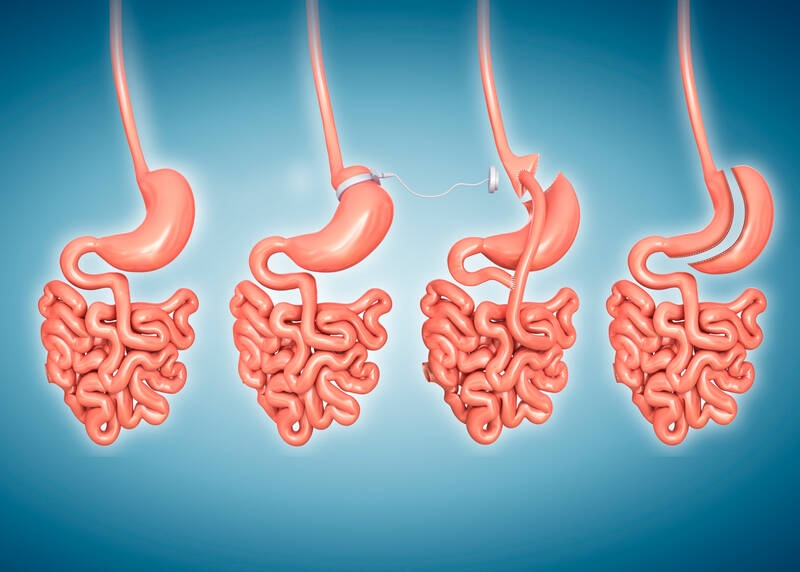


From left to right: a normal stomach, a gastric band, gastric bypass and sleeve gastrectomy / © Getty Images/Science Photo Library/Pixologicstudio
While last week the weight loss success of TV presenter Michael Schanze (78 years old) with the help of Tirzepatide made headlines (from almost 200 to 102 kilograms), football manager Reiner Calmund (76 years old) achieved a similar feat back in 2020 with gastric bypass surgery (from 180 to around 90 kilograms). Neither is an isolated case, as extreme obesity is no longer a rarity, and these examples demonstrate the effectiveness of both methods.
"Even greater weight loss can still be achieved with surgery," explained Dr. Mark Philipp, senior physician and head of the minimally invasive, hernia, endocrine and obesity surgery department at Rostock University Hospital, last Friday at the Scheele conference in Warnemünde to around 130 pharmacists.
The surgeon explained the most effective method in particular: gastric bypass. This allows for a reduction of excess weight, i.e., the superfluous body weight, by up to 70 percent (gastric banding: up to 50 percent; sleeve gastrectomy: up to 60 percent).
The gastric band is rarely used today; not only because it is less effective, but also because it can migrate and cause complications and does not limit the intake of liquid calories.
During a sleeve gastrectomy, a large portion of the stomach is separated and removed along the greater curvature. The remaining portion is tube-shaped, hence the name. "The resection is relatively simple, but irreversible, and the stomach can also weaken," explains Philipp. Some weight gain after two to three years is to be expected, but disciplined patients generally manage this surgery well. A common side effect is increased or newly occurring reflux.
Philipp prefers gastric bypass surgery, even though it's the more complex procedure. In this procedure, the path of food is rerouted through artificially created connections (anastomoses), bypassing large portions of the stomach and parts of the small intestine. Significantly less food fits into the smaller stomach pouch, and the shortened intestine also reduces the absorption surface area. The patient not only loses weight but also experiences metabolic stabilization. This can... Type 2 diabetes can go into remission, the surgeon explained.
Side effects such as "dumping syndrome," where food passes through the digestive system very quickly, are also possible. Furthermore, malabsorption disorders with vitamin and trace element deficiencies can occur, which must be addressed. With gastric bypass surgery, oral drug therapy may need to be adjusted , whereas, according to Philipp, a sleeve gastrectomy has little impact on pharmacokinetics. And even patients with gastric bypass surgery tend to regain weight eventually, making dietary and lifestyle changes essential.

pharmazeutische-zeitung


