
ALEX BRUMMER: Brooklyn Beckham's billionaire father-in-law is one of the forces behind a destructive deal that threatens one of our greatest companies
Updated:
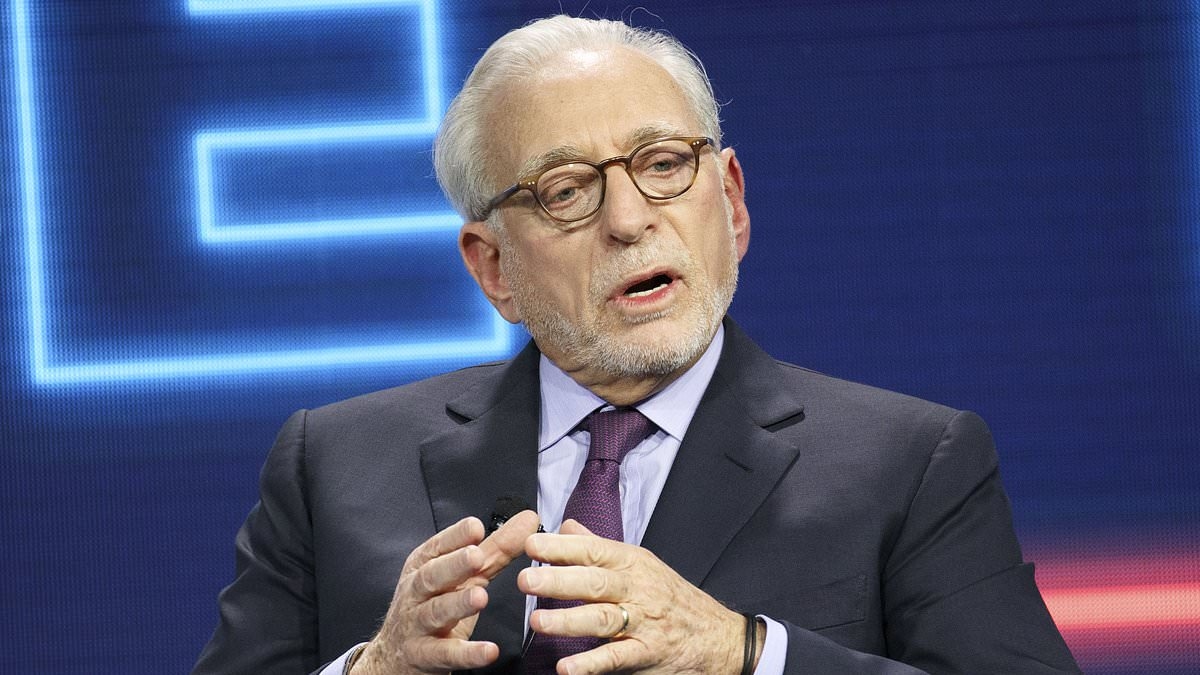
Nelson Peltz is best known in Britain as the super-rich father-in-law of Brooklyn Beckham, the estranged eldest son of David and Victoria.
Peltz, a wizened 83-year-old billionaire who made his fortune in the food industry, has been the scourge of some of Britain’s most esteemed food and consumer-goods companies down the decades and his actions have forced them into overseas ownership, as we shall see.
Now he is at it again. He is among the movers behind the self-immolation of Unilever, one of Britain’s oldest, most respected, and far-reaching consumer goods giants.
It is currently valued at £94bn on the London Stock Exchange, employs 96,000 people worldwide and has annual global sales of £44bn. Founded at Port Sunlight on the Wirral almost a century ago, Unilever is home to some of our best-known brands, from Marmite, Colman’s Mustard, Hellmann’s mayonnaise to Knorr stock cubes.
It houses beauty and domestic products such as Radox, Dove and TREsemme as well as the household cleaning brand Cif.
It boasts extraordinary reach into America and newly rich countries in Asia and Latin America.
Peltz’s company Trian has been investing in Unilever for many years. He has been, as his website puts it, ‘a highly engaged shareholder’, and has long been seen as an agitator who likes to tell CEOs how to run their businesses.
In 2022, he was invited on to the board as an independent (non-executive director). It was felt he would do less damage inside the tent, than shouting from the outside.

Nelson Peltz is best known in Britain as the super-rich father-in-law of Brooklyn Beckham, the estranged eldest son of David and Victoria

Peltz’s company Trian has been investing in Unilever for many years – as he has been ‘a highly engaged shareholder’
But ever since his arrival, the flagship consumer goods outfit has experienced extraordinary turmoil. It has employed three chief executives in as many years. Just as tellingly, it has been engaged in a corporate ‘dance of the seven veils’, discarding valuable assets to satisfy the demands of Peltz and others for bigger shareholder dividends and share buybacks. It should instead have been investing in operations for the long term.
A decade ago, it sold off its global spreads division –including the brands Flora and Stork – to private equity barons KKR for £6bn.
Since then, out the door have gone Lipton, PG Tips and the trendy Pukka teas. Earlier this year it floated off its ice-cream division, home to Magnum and Ben & Jerry’s, on the Euronext Amsterdam stock exchange.
Then, at the end of March, Unilever sent shockwaves through the City of London when it abruptly announced it was getting out of food altogether and proposed selling the entire food- product empire to a smaller American spices and ingredients firm, McCormick, in a £34bn deal. The transaction has angered loyal Unilever investors.
The loss of Unilever’s food brands would be a hammer blow to British manufacturing, to the supply chain, the jobs market and to our national prestige.
Yet the transaction has not raised an eyebrow in Labour’s feeble Government which has little to no understanding of business.
Worse, the sale would represent a direct threat to Britain’s goals of boosting world trade since Brexit a decade ago, and successive governments’ resultant focus on securing deals with India and Asian-Pacific economies, rather than the sclerotic European Union.
Many worry that the deal, if it goes ahead, would leave Unilever vulnerable to foreign marauders, meaning the country would lose its valuable and innovative research and development arm, which holds 16,500 active patents. But given current take-over trends it is all-too possible. In the first six months of this year, foreign buyers and private equity sharks gobbled up £128bn worth of FTSE100 companies listed in London ranging from bookies Evoke (owners of William Hill) to world-leading industrial instruments group Intertek. The combined value of the companies we have lost in the first half of the year is already equal to that of the whole of 2025.
Little has been heard in Whitehall, of course, despite the deep angst about the situation in the financial community, with investment bankers Peel Hunt describing the bloodbath as a ‘national disgrace’.
What is so tragic is that the Unilever fiasco was utterly predictable – for Britain has witnessed the disruptive power of Peltz before. In the first decade of this century, it was Peltz and his Trian funds that encouraged Cadbury Schweppes to spin off its soft-drinks arm to a company that owned Dr Pepper, 7up and the historic Schweppes tonics and mixers.
The deal proved to be the prelude to the sale of Britain’s totemic chocolate-maker Cadbury. After the soft drinks had been hived off, Cadbury became vulnerable as a standalone enterprise and in a hard-fought takeover was sold to US cheese giant Kraft for £11bn.
The American buyer promised to keep British factories open and not interfere with our chocolate making traditions. Yet weeks after the deal was completed, a key factory making Fry’s products was closed at Keynsham, near Bristol.

Cadbury became vulnerable as a standalone enterprise and in a hard-fought takeover was sold to US cheese giant Kraft
Join the discussion
Should foreign billionaires be allowed to break up iconic British companies like Unilever?
Control passed to a newly formed confectionery offshoot Mondelez (where it still sits) and ingredients for Dairy Milk and Cadbury Creme Eggs changed. Having witnessed all this first-hand as this paper’s City Editor, I now fear the same kind of financially engineered changes could face a diminished Unilever which already has been sliced and diced with Peltz’s approval.
This paper fought a hard campaign in 2017 to stop the highly indebted food giant Kraft Heinz (yes, the same Kraft which swallowed Cadbury) from swallowing Unilever in a £115bn bid.
Soon afterwards the Dutch-dominated board at Unilever sought to transfer the company’s stock market listing from London to Rotterdam in 2018 in the belief it would be better protected from takeover.
Again, the Daily Mail opposed the change, and Unilever consolidated its share quote, headquarters and leadership in Britain, effectively cancelling the Dutch connection.

None of this is to say that Unilever is a British treasure without reproach. Previous leadership at Unilever has come under fire for focusing on wokery. The loudest criticism came from renowned and highly successful British fund manager Terry Smith.
His £29bn investment vehicle has, over the years, regularly outperformed its rivals. In 2022 he attacked Unilever for its ‘ludicrous’ focus on sustainability.
It is hugely significant that after 16 long and patient years as a loyal Unilever shareholder, Smith announced earlier this month that he was dumping his whole Unilever stake.
He is angry at the decision of the board to entrust the ownership and management of its valuable food division, which accounts for almost 50 per cent of the group, to the underwhelming McCormick.
The fact is that we are witnessing an attempt to dismantle a world-class UK company which still has enormous clout and trust in the US, Europe and globally.
This badly misjudged deal, which has the full support of the billionaire Peltz, is harmful to the national economic interest and must be stopped.

This İs Money