Mümtaz'er Türköne wrote: Who wins, who loses?
In his article titled “Who wins and who loses?”, Mümtaz'er Türköne wrote that political competition in Türkiye has entered a new era, the autocratic structure of the government has begun to dissolve, and the opposition has entered a period in which it is “gaining power without striking.”
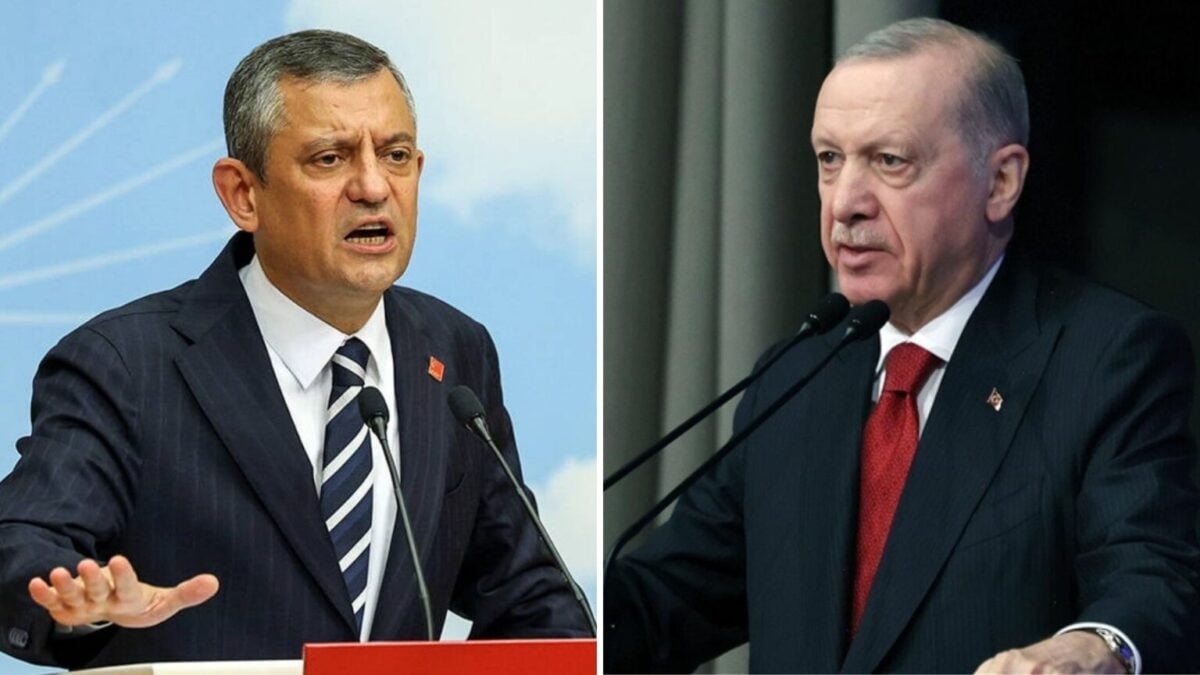
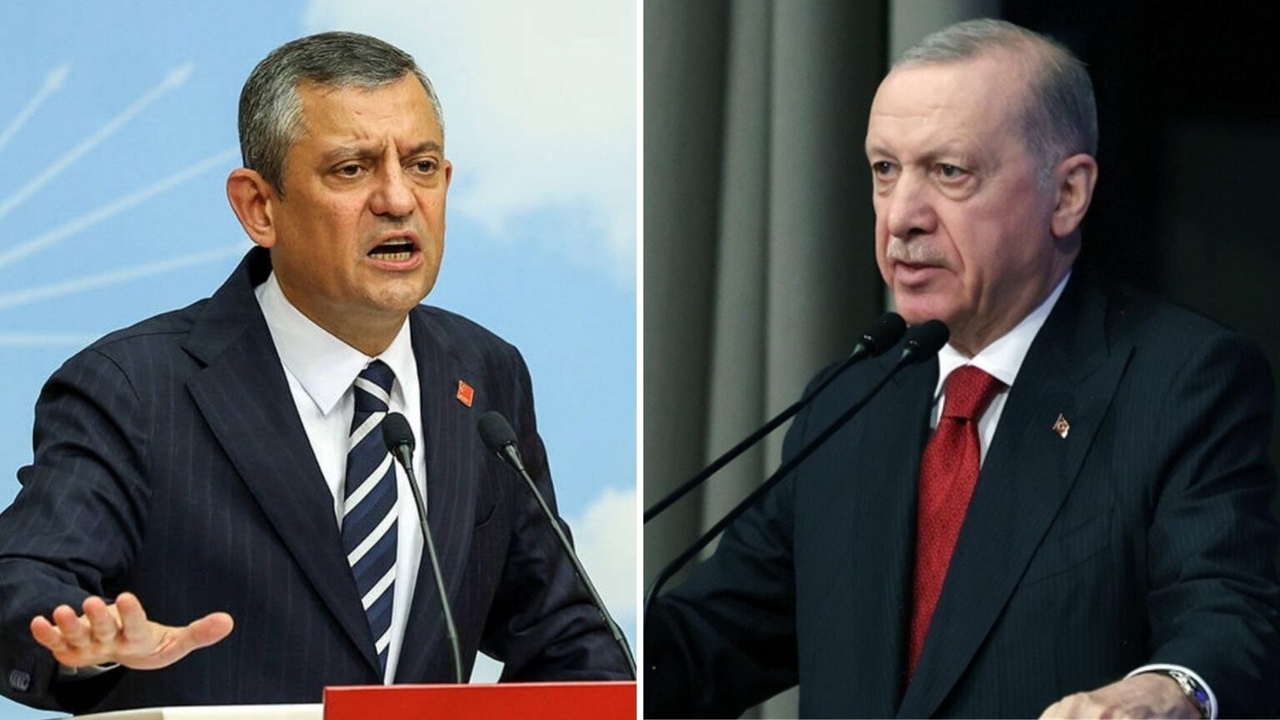
We are witnessing the lightning flashes emerging from the clash of strategies and tactical moves. Angry cries intersect like thunder. The political rivalry between the ruling party, Erdoğan, and the opposition, the CHP, continues at full speed, a fierce battle in its most brutal phase.
Wars aren't fought when the interests of the parties clash. It's always the perceptions and possibilities of threats that trigger war, not the concrete situation. The possibility of a change of government in 2028 is the real cause of today's war. The CHP is seen as a threat. This possibility automatically brings the election to 2027, but it doesn't stop there. This determination leads those who are calculating based on the possibility of loss to take a full-throttle position on the political stage, forcing Türkiye to hold an even earlier election. A snap election in 2026, while the almond trees are in bloom, is a not inconsiderable possibility.
Of course, the parties are not fighting against equal forces. The ruling party is mobilizing all the forces and resources at its disposal to prolong its existence. All the opposition can do is patiently resist. Because the war is being arbitrated by the people, justice, not force, determines the outcome.
We will see the fruits of the dynamics that began in October 2024 and are propelling Turkey into a completely new direction before 2026 arrives. The elimination of Iran by the US and Israel and the end of the Syrian civil war have made Turkey the most powerful actor in the region. At the same time, Turkey has entered into closer cooperation with the US and the UK in regional policy. The peace process has been presented to us on a silver platter, the product of new dynamics, shifting positions of key actors, and regional balances that exceed Turkey's will.
The democratic and legal foundations of the peace process, indispensable to the process, neutralized the power and instruments of power held by the Palace, which had built its own autocracy between 2017 and 2023. Believing it could not govern without these instruments, the government patiently resisted the process, playing for time and relying on the opportunities presented by chance. The anticipated windfall never arrived, and time ran out. Therefore, the consequences of the past year will lie before us like the arable alluvial soil left behind by floodwaters.
Selahattin Demirtaş's release will be a turning point, setting off a chain reaction of new reactions. The deadline granted to the government by the Commission has also been extended. The PKK has done its part for a Terror-Free Turkey. It's the state's turn now. A single individual, Erdoğan, will lift the reservation he placed, and the process will be back on track, this time by mutual consent.
The peace process has demonstrated over the past year that the government's autocratic privileges and the interests of the Republic of Turkey and the Turkish nation are in conflict beyond contradiction. The government now has no choice but to overcome this contradiction by returning to rule of law and democracy, paving the way for Türkiye's bright future.
The question of who will inherit Erdoğan's political legacy is a crucial one, one that bears directly on today's political calculations, not the future. A leader who abandons his succession to uncertainty, and therefore chaos, cannot contain his steely core, which plays right-left. The appointment of a crown prince or successor , where one individual is unquestionably prominent, brings balance and tranquility to the existing ruling elite. Conversely, leaders who seek to manage and balance their subordinates turn the succession issue into a contest, effectively seizing control. Erdoğan has no need for a second-in-command. Once he announces his successor, he can plan for the future and, consequently, take control of the present.
The real issue is political legacy. The AK Party began as a liberal Islamist party within the National Vision tradition, with its core cadres. As it became unrivaled, it employed its preferences, such as expanding religious education and protecting the Directorate of Religious Affairs, in purely formal terms. As it purged its doctrinal cadres, the AK Party also moved away from being a party of cause. Today's AK Party appears inclined to maintain its identity as a center-right party, like the Justice Party-DYP or the ANAP, with loose ties. Does Erdoğan have a political and ideological legacy beyond the influence of his personal charisma? In the future, some may attempt to selectively cultivate a political identity over the past 23 years, depending on circumstances. However, there are no visible signs of this potential legacy today.
What appears today is a ruling power equation that fails to meet dictatorial standards, as the opposition has not fully intimidated itself and has not abandoned its role as an alternative to the ruling party, and is attempting to construct extreme autocratic tendencies by straining the country's constitutional structure. The fact that the planned stages of this process are solely under Erdoğan's control and that the desperate but persistent efforts to purge the CHP can be interpreted as a summary of this situation.
First of all, the government is crushed under a dysfunctional political system that lacks the capacity to provide solutions. It is unable to find solutions where it is stuck. The Presidential System of Government has not only concentrated power in a single hand; it has also destroyed the checks and balances that enable the system to function effectively and sensitively, with a sensitivity to action and reaction. The fact that the government members and the bureaucracy, who appear to be largely under the command of the Palace, create an uncontrolled and therefore ineffective power at the center and in the provinces explains the most significant reason for the system's deadlock. The parliamentary system seamlessly conveyed rising demands from society to the system, overseeing and monitoring solutions. The current system is unaware of problems beyond complaints received by the Central Bank of the Republic of Turkey (CIMER). There are countless unresolved systemic problems, and under these circumstances, solutions are impossible.
The economic crisis emerged as a systemic problem, and it remains unresolved because of this system. The operating system, production line, input-output compatibility, and organizational chart are all unrelated.
The justice system is bankrupt. The Justice Minister claims that Turkey is the country that complies with ECHR rulings with the highest percentage, but he doesn't provide a number. Türkiye has more cases before the ECHR and rulings that have not been complied with than all the 46-odd countries with those rulings combined, except for Russia. He also fails to mention that the rulings that have not been complied with are politically motivated cases.
Unlawful dominance over the political competitive order destroys the sense of justice throughout the country, and above all, it eliminates the sense of trust that is indispensable for the economy.
The government's losses are being written off as profits for the opposition. This hostile attitude opens the door to public empathy with the opposition. Masses suffering from the economy identify with the CHP. The government builds a ladder of hostility against the opposition, increasing public support. By climbing this ladder, the opposition transforms the widening gap between them and the government into an undeniable advantage. Autocracy collapses by colliding with the country's realities.
Public opinion polls show that three opposition figures have a clear lead over Erdoğan. The fundamental difference between party affiliation and personal preferences suggests that the government is poised to be overthrown by its own construction.
Think of agendas as the fuel points you earn by attacking in those computer games. The government loses power by attacking, while the opposition gains power without attacking. Then, when those observing this relentless competition position themselves based on the newly emerging balance of power, the conundrum of the power transition is carried forward from the upcoming election date to the present. The lines are tight.
The events that are happening, in other words, the power plays that are occupying the agenda, appear before you as a close calendar that determines who will win and who will lose by postponing the events.
These are those days.

Medyascope